
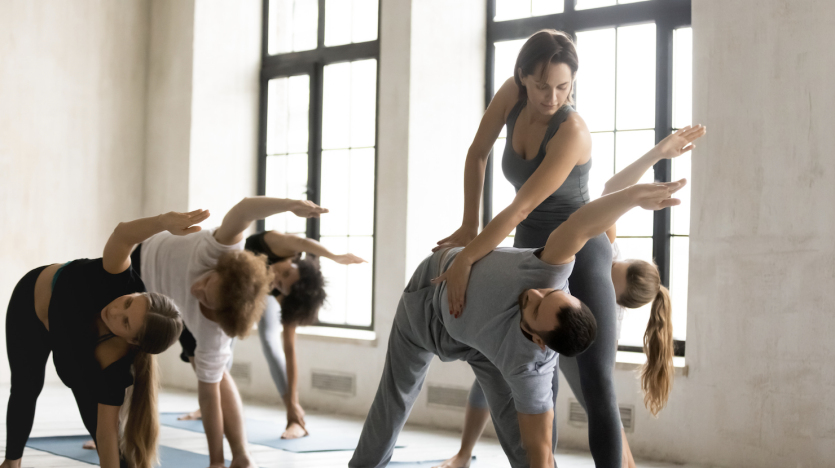
Corporate wellness in Singapore has undergone a significant transformation over the past decade. What was once a peripheral HR initiative, perhaps a subsidised gym membership or an annual health screening, has evolved into a strategic priority for companies seeking to attract talent, reduce healthcare costs, and build a workforce that is genuinely capable of sustained high performance. Within this shift, one of the most meaningful developments has been the move away from one-size-fits-all wellness offerings toward personalised, results-oriented interventions. The integration of a private yoga instructor Singapore into corporate wellness programmes represents one of the clearest expressions of this evolution.
The rationale is straightforward. Group yoga classes offered as a workplace benefit have value, but they serve a general population. Employees with chronic pain, stress-related conditions, postural imbalances, or specific health goals require targeted support to experience meaningful outcomes. Private yoga instruction within a corporate context delivers exactly this, and the business case for it is increasingly well-supported by data on productivity, absenteeism, and employee retention.
The Business Case for Private Yoga in the Workplace
Reduced Absenteeism and Healthcare Costs
Musculoskeletal conditions and mental health disorders are among the leading causes of workplace absenteeism in Singapore. Lower back pain alone accounts for a significant proportion of medical leave taken by desk-based workers each year. These conditions are expensive not only in direct healthcare costs but in lost productivity, reduced engagement, and the administrative burden of managing absences.
Private yoga programmes that target these specific conditions can produce measurable reductions in symptom severity over relatively short timeframes. Employees who receive targeted support for back pain, for instance, often report significant functional improvement within six to eight weeks of consistent private sessions. When this improvement translates into fewer medical leave days and reduced reliance on pain management interventions, the financial impact is tangible and trackable.
Improved Productivity and Cognitive Function
The relationship between physical wellbeing and cognitive performance is well-established. Chronic pain, sleep disruption, and high stress levels all impair the prefrontal cortex functions responsible for decision-making, sustained attention, and creative thinking. These are precisely the cognitive capacities that knowledge workers in Singapore are expected to deploy at high levels every working day.
Regular yoga practice, particularly when delivered in a private format that allows for nervous system-focused techniques, has been shown to improve sleep quality, reduce cortisol levels, and enhance attention regulation. Employees who are sleeping better, managing stress more effectively, and moving without pain are measurably more productive and make better decisions. For companies in competitive industries, this is not a soft benefit but a genuine performance advantage.
Enhanced Employee Retention and Satisfaction
Singapore’s labour market is competitive, and retaining skilled employees is a persistent challenge across sectors. Compensation is only one dimension of the employee value proposition; increasingly, professionals consider the quality of their employer’s commitment to their wellbeing when evaluating whether to stay or leave. A private yoga programme is a visible, concrete demonstration of that commitment.
Unlike generic wellness benefits that employees may never actually use, private yoga sessions are scheduled, personalised, and immediately valuable to the individual. They signal that the company is investing in the employee as an individual rather than providing a checkbox benefit. This kind of meaningful investment has a disproportionate effect on loyalty and satisfaction relative to its cost.
How Corporate Private Yoga Programmes Are Structured
In-Office and Remote Delivery Models
Private yoga for corporate wellness can be delivered in a variety of formats depending on the company’s infrastructure and workforce distribution. In-office sessions can be conducted in meeting rooms, wellness spaces, or dedicated areas, often using minimal equipment. For companies with hybrid or fully remote workforces, virtual private sessions via video call are equally effective for many wellness goals and remove all logistical barriers for employees working from home.
Some companies structure programmes as a series of sessions allocated to each employee over a quarter, while others use a more flexible model where employees book sessions as needed within a set budget. Both approaches can work well, and the right structure depends on the size of the organisation, the wellness goals being targeted, and how the programme fits within the broader HR benefits framework.
Targeting Specific Employee Populations
The most effective corporate private yoga programmes are not applied uniformly across an entire workforce but are targeted toward the employee populations with the greatest need and the highest potential for measurable impact. This might include senior leaders experiencing burnout, project teams under intensive deadline pressure, employees returning from extended medical leave, or departments with high incidences of musculoskeletal complaints.
By concentrating private yoga resources where they will have the most impact, companies can demonstrate clearer outcomes and make a stronger case for continued or expanded investment in the programme.
Integration With Existing Wellness Initiatives
Private yoga works best when it is integrated into a broader wellness ecosystem rather than positioned as a standalone offering. Companies that connect their private yoga programme with existing EAP services, mental health resources, ergonomics assessments, and nutritional support create a more coherent and comprehensive approach to employee wellbeing. The private yoga instructor can also collaborate with HR, occupational health, or even physiotherapy services to ensure that the programme complements rather than duplicates other interventions.
Measuring the Impact of Corporate Private Yoga
One of the challenges companies face in justifying wellness investment is the difficulty of measuring impact. Private yoga programmes can be evaluated through a combination of quantitative and qualitative measures including employee-reported wellbeing scores, absenteeism rates, engagement survey results, and biometric data where applicable.
Setting clear goals at the outset of a programme, whether that is a reduction in stress-related leave, improvement in sleep quality scores, or a decrease in musculoskeletal complaints, creates a framework for meaningful evaluation. When outcomes are tracked consistently, companies can build a compelling internal case for the programme and refine it based on what is working best for their specific workforce.
For companies in Singapore looking to implement a private yoga programme that is professionally designed and delivered by qualified instructors, Yoga Edition offers corporate wellness solutions that are tailored to the specific needs and goals of each organisation.
FAQ
Q: How much does it typically cost to add private yoga to a corporate wellness programme in Singapore? A: Costs vary depending on the number of employees, session frequency, and delivery format. Many providers offer corporate packages that are significantly more cost-effective per session than individual private bookings, and some companies structure the benefit as a per-employee monthly allocation.
Q: Do employees need any prior yoga experience for corporate private sessions? A: No. Private sessions are designed to meet each employee where they are physically and experientially. Instructors working in corporate contexts are experienced at working with complete beginners, those returning from injury, and everything in between.
Q: Can private yoga sessions be conducted during work hours without significantly disrupting productivity? A: Yes. Sessions of 45 to 60 minutes can be scheduled during lunch breaks or at the start and end of the workday with minimal disruption. Many employees find that a midday session actually enhances their afternoon productivity significantly.
Q: How do we handle employees with specific medical conditions or injuries in a corporate programme? A: A reputable private yoga provider will conduct individual health intake assessments before beginning sessions with each employee. Instructors adapt programming to each person’s specific conditions and will refer to medical professionals when a condition falls outside the scope of yoga instruction.
Q: Is there a minimum company size required to implement a corporate private yoga programme? A: No. Even small teams of five to ten employees can benefit from a structured private yoga programme. In fact, smaller teams often see faster and more visible outcomes because it is easier to track individual progress and build the instructor-client relationship in a more intimate setting.