
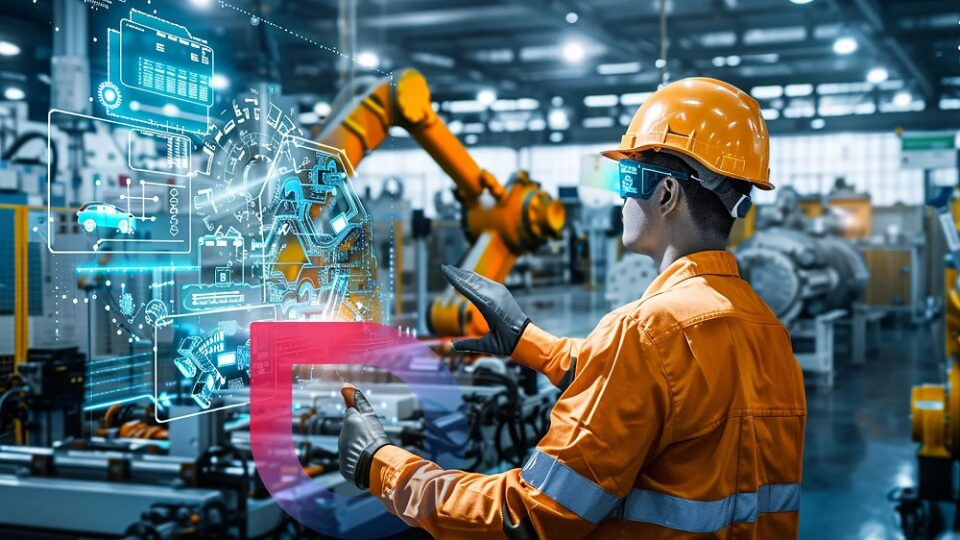
The global manufacturing sector stands on the precipice of its most profound transformation since the introduction of assembly line automation. For decades, industrial progress was measured by the speed, size, and mechanical reliability of physical hardware. Today, the primary driver of industrial competitive advantage has shifted from hardware capacity to software intelligence.
The integration of advanced artificial intelligence into factory ecosystems is reshaping everything from shop floor operations to global logistics networks. In this new era, factories are evolving from collections of automated machinery into hyper-connected, self-optimizing ecosystems. Industrial leaders who embrace these intelligent workflows are unlocking unprecedented levels of productivity and waste reduction, while those who lag behind risk terminal obsolescence in an increasingly rapid market.
The Shift to True Predictive Maintenance
For generations, industrial facilities operated on two distinct maintenance models: reactive maintenance, where machines were fixed only after they broke down, or preventative maintenance, where parts were replaced on a rigid, time-based schedule regardless of their actual wear. Both approaches introduce massive economic inefficiencies through unexpected downtime or the premature discarding of expensive components.
Artificial intelligence enables a transition to true predictive maintenance. By installing networks of industrial internet of things sensors across critical machinery, factories can continuously monitor physical variables such as acoustic vibrations, thermal output, electromagnetic fluctuations, and oil degradation.
The Mechanics of Algorithmic Monitoring
Machine learning models analyze these vast, real-time data streams to establish a baseline of normal operational behavior.
-
Early Anomaly Detection: The system flags micro-deviations that are invisible to human operators or traditional threshold alerts, such as a microscopic bearing misalignment.
-
Proactive Scheduling: Instead of halting production during peak hours, the software predicts the exact remaining useful life of the component and automatically schedules maintenance during natural production lulls.
-
Automated Supply Coordination: The intelligent system can sync directly with inventory management software to order the required replacement part before the maintenance technician even steps onto the shop floor.
Generative Design and Autonomous Product Development
The impact of artificial intelligence extends far beyond the assembly line; it is fundamentally altering how products are conceptualized and engineered. Traditionally, product design was an iterative, manual process where human engineers drafted blueprints, ran simulated stress tests, and modified designs based on structural failures.
Generative design software leverages artificial intelligence to turn this process on its head. Engineers no longer design the physical shape of a component. Instead, they input a set of functional parameters and constraints into an AI algorithm.
Transforming Engineering Workflows
The algorithm evaluates thousands of geometric iterations simultaneously, running virtual physics simulations on each design variant to optimize for multiple performance metrics.
-
Material Optimization: The software frequently creates organic, lattice-like structures that minimize raw material use while maximizing structural strength.
-
Weight Reduction: This approach is critical for aerospace and automotive manufacturing, where reducing a component’s weight directly translates to lifetime fuel efficiency gains.
-
Consolidation of Parts: Generative design can combine complex assemblies that previously required a dozen separate brackets and fasteners into a single, highly optimized component ideal for advanced additive manufacturing.
Hyper-Personalization and Agile Supply Chains
The modern consumer landscape is moving away from mass-produced, identical commodities toward hyper-personalized goods tailored to individual specifications. Historically, modifying a product design required shutting down a production line for days to retool physical molds, dies, and robotic pathways. This rigidity made low-volume custom manufacturing financially non-viable.
Artificial intelligence introduces unprecedented flexibility into industrial workflows, making single-unit customization as cost-effective as large-scale production runs.
Orchestrating Flexible Factory Floors
By linking consumer demand directly to intelligent shop floors, businesses can establish highly dynamic production models.
-
Dynamic Computer Vision: AI-powered robotic arms use advanced computer vision algorithms to identify different product variants moving down a single, mixed-use assembly line, adjusting their assembly techniques, torque settings, and packaging behaviors instantly without human intervention.
-
Autonomous Intralogistics: Self-driving fleet units, known as autonomous mobile robots, navigate complex warehouse floors dynamically, delivering raw components to specific workstations on demand, optimizing their paths based on real-time traffic data.
-
Real-Time Supply Chain Balancing: Predictive software monitors global macroeconomic data, weather disruptions, and political changes to predict material shortages, allowing firms to pivot to alternative suppliers before a bottleneck halts operations.
Redefining the Industrial Workforce
The rise of the intelligent factory has sparked intense debate regarding the future of human labor in manufacturing. While repetitive, low-skilled physical tasks are increasingly being automated, the narrative of completely dark, human-free factories misses a critical nuance. The future of manufacturing relies on collaborative environments where humans work alongside intelligent systems.
The Rise of Cobotics and Expert Oversight
The industrial workforce is shifting away from manual execution toward systems orchestration and technical oversight.
-
Collaborative Robots: Modern industrial robots are equipped with advanced proximity sensors and spatial AI, allowing them to work safely alongside human operators without protective cages, handling heavy lifting while humans focus on precision tasks.
-
Augmented Reality Training: Technicians use smart glasses overlaying digital instructions onto physical machinery, with real-time AI checking their work step-by-step to eliminate manual assembly errors.
-
The Domain Expert Shortage: The demand for workers who can interpret complex data sets, train machine learning models, and troubleshoot interconnected digital networks is skyrocketing, making continuous upskilling a core corporate mandate.
Frequently Asked Questions
What is the structural difference between traditional industrial automation and AI-driven manufacturing?
Traditional industrial automation relies on rigid, pre-programmed logic paths where a machine executes a specific, repetitive command exactly the same way every time. If a component arrives slightly misaligned or out of sequence, a traditional automated machine will fail or jam. AI-driven manufacturing incorporates adaptability. Using sensor data and computer vision, an intelligent system can perceive unexpected changes in its physical environment, make contextual decisions, and alter its behavioral patterns to complete the task successfully without human intervention.
How do small to mid-sized manufacturers adopt artificial intelligence without massive capital reserves?
Small and mid-sized enterprises can adopt artificial intelligence incrementally through a modular approach. Instead of completely rebuilding a factory floor, businesses can retrofit existing legacy machinery with inexpensive external internet of things sensors to harvest data. This data can then be routed into cloud-based software-as-a-service platforms that provide predictive maintenance alerts or energy optimization insights for a predictable monthly subscription fee, avoiding high upfront capital expenditures.
Does the implementation of generative design make human mechanical engineers obsolete?
No, generative design does not replace human engineers; it elevates their role from manual draftsmen to high-level strategic problem solvers. The artificial intelligence can generate geometric solutions based on constraints, but it cannot define the initial problem, understand broader market context, or evaluate aesthetic appeal. Human engineers are required to set accurate boundary conditions, choose appropriate raw materials, ensure compliance with safety standards, and select the final design variant that aligns with commercial realities.
How does artificial intelligence contribute to sustainability and carbon reduction goals in manufacturing?
Artificial intelligence directly drives industrial sustainability through optimization. By analyzing thermodynamic data, AI systems optimize the energy consumption of heavy machinery and industrial HVAC systems, significantly lowering electricity draw. Furthermore, predictive quality control models identify manufacturing defects early in the production cycle, preventing the waste of raw materials and reducing scrap rates, while optimized logistics routes minimize fuel emissions across the supply chain.
What is a digital twin, and how does it function within an intelligent factory?
A digital twin is a dynamic, virtual replica of a physical asset, production line, or entire manufacturing plant. It is continuously updated with real-time data from shop-floor sensors. Using this virtual model, operations managers can run infinite what-if scenarios, simulate production line changes, and stress-test new operational workflows in a risk-free digital environment before implementing any physical changes on the actual factory floor.
How do manufacturers protect AI-driven factories from cyberattacks?
As factories connect to the internet and cloud systems to process data, they increase their vulnerability to cyber threats. Protecting an intelligent factory requires a zero-trust architecture. This involves segmenting operational technology networks entirely away from standard corporate office networks, encrypting all sensor data, deploying automated AI threat detection tools that flag unusual network traffic, and enforcing strict cryptographic authentication protocols for any remote software updates.