
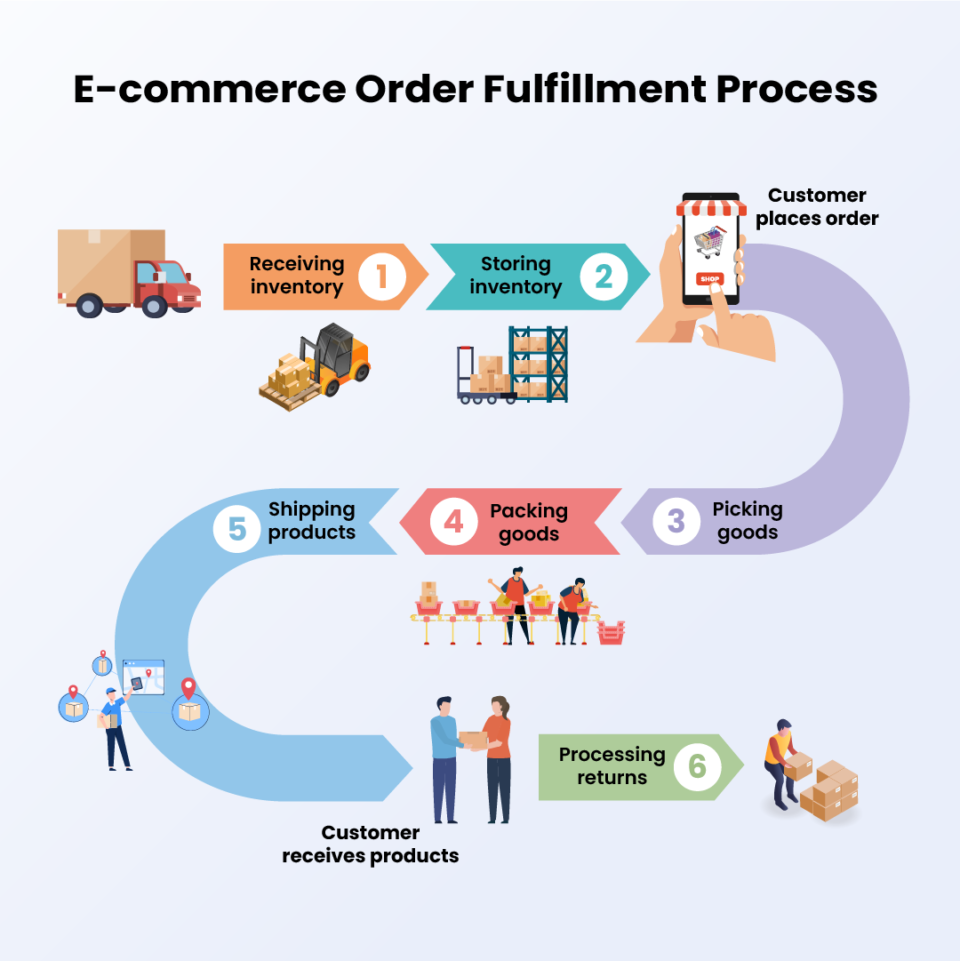
Managing orders efficiently is one of the most critical challenges for online businesses. As sales volumes grow and customer expectations rise, manual processes quickly become a bottleneck. Modern online business systems are designed to streamline order management and fulfillment, helping companies reduce errors, speed up deliveries, and maintain control across sales channels.
Why Order Management and Fulfillment Matter
Order management and fulfillment sit at the core of the customer experience. Delays, incorrect shipments, or poor communication can damage trust and increase operational costs. A well-structured system brings clarity and consistency to every step, from order placement to final delivery.
Effective systems help businesses:
-
Process orders faster with fewer mistakes
-
Maintain accurate inventory levels
-
Coordinate shipping and delivery more smoothly
-
Provide customers with reliable order updates
Centralized Order Management Platforms
Centralized order management systems bring all sales channels into one dashboard. Whether orders come from a website, marketplace, or mobile app, everything is tracked in a single location.
Key benefits include:
-
Unified view of all incoming orders
-
Automatic order status updates
-
Reduced duplication of data entry
-
Easier handling of returns and cancellations
By eliminating the need to switch between tools, teams can focus on resolving issues rather than tracking information.
Inventory-Integrated Systems
Order management works best when inventory data is updated in real time. Systems that integrate inventory tracking prevent overselling and stock discrepancies.
These systems typically offer:
-
Real-time stock visibility across locations
-
Automatic stock adjustments after each order
-
Low-stock alerts for timely replenishment
-
Better forecasting using historical data
This level of visibility is especially valuable for businesses managing multiple warehouses or fulfillment partners.
Automated Fulfillment Workflows
Automation plays a major role in simplifying fulfillment. Once an order is confirmed, automated workflows can trigger picking, packing, and shipping tasks without manual intervention.
Automation supports:
-
Faster order processing times
-
Consistent packing and labeling standards
-
Automatic generation of invoices and shipping labels
-
Fewer errors caused by repetitive manual work
For growing businesses, automation ensures that higher order volumes do not compromise accuracy.
Shipping and Delivery Management Tools
Shipping management systems integrate with multiple carriers, allowing businesses to compare rates, generate labels, and track shipments from one interface.
Common advantages include:
-
Carrier rate comparison to control costs
-
Real-time shipment tracking for customers
-
Automated delivery notifications
-
Simplified handling of international shipments
These tools improve transparency and reduce customer support inquiries related to order status.
Cloud-Based Systems for Scalability
Cloud-based order management and fulfillment systems allow businesses to scale without heavy upfront investment. Updates, data backups, and security are handled by the provider, reducing the burden on internal teams.
Cloud systems offer:
-
Access from anywhere with secure logins
-
Easy integration with ecommerce platforms
-
Flexible pricing based on usage
-
Faster onboarding for new team members
This flexibility makes cloud solutions suitable for both startups and established online brands.
Choosing the Right System
Selecting the right system depends on business size, order volume, and complexity. The best solutions are those that integrate smoothly with existing tools and support future growth.
When evaluating options, consider:
-
Ease of use for daily operations
-
Integration with sales and accounting tools
-
Customization options for workflows
-
Quality of customer support
A system that aligns with business processes delivers long-term operational value.
FAQ
What is an online order management system?
It is a software platform that tracks and manages orders from placement to fulfillment, providing visibility and control over the entire process.
How do these systems reduce fulfillment errors?
They automate repetitive tasks, sync inventory in real time, and standardize workflows, minimizing manual mistakes.
Are order management systems suitable for small businesses?
Yes, many cloud-based solutions are designed to scale and offer affordable plans for small and growing businesses.
Can one system manage multiple sales channels?
Most modern systems support multi-channel selling, consolidating orders from websites, marketplaces, and social platforms.
How do fulfillment systems improve customer satisfaction?
They enable faster processing, accurate deliveries, and timely order updates, which builds trust with customers.
Is automation necessary for order fulfillment?
While not mandatory, automation significantly improves efficiency and consistency, especially as order volumes increase.
What should businesses prioritize when upgrading their order systems?
Integration capability, real-time data accuracy, and ease of use should be top priorities to ensure smooth adoption.